Restaurant brand identity from scratch: Emmerka case study
When a message arrived from Trnava about a new café in a historic villa, I knew immediately this would be a different kind of project. Emmerka is housed in the Emmer Villa — a 19th-century building with rococo frescoes, vaulted ceilings, and gilded ornaments on Hlavná ulica. A space like that demands a visual identity that speaks the same language as its interior.
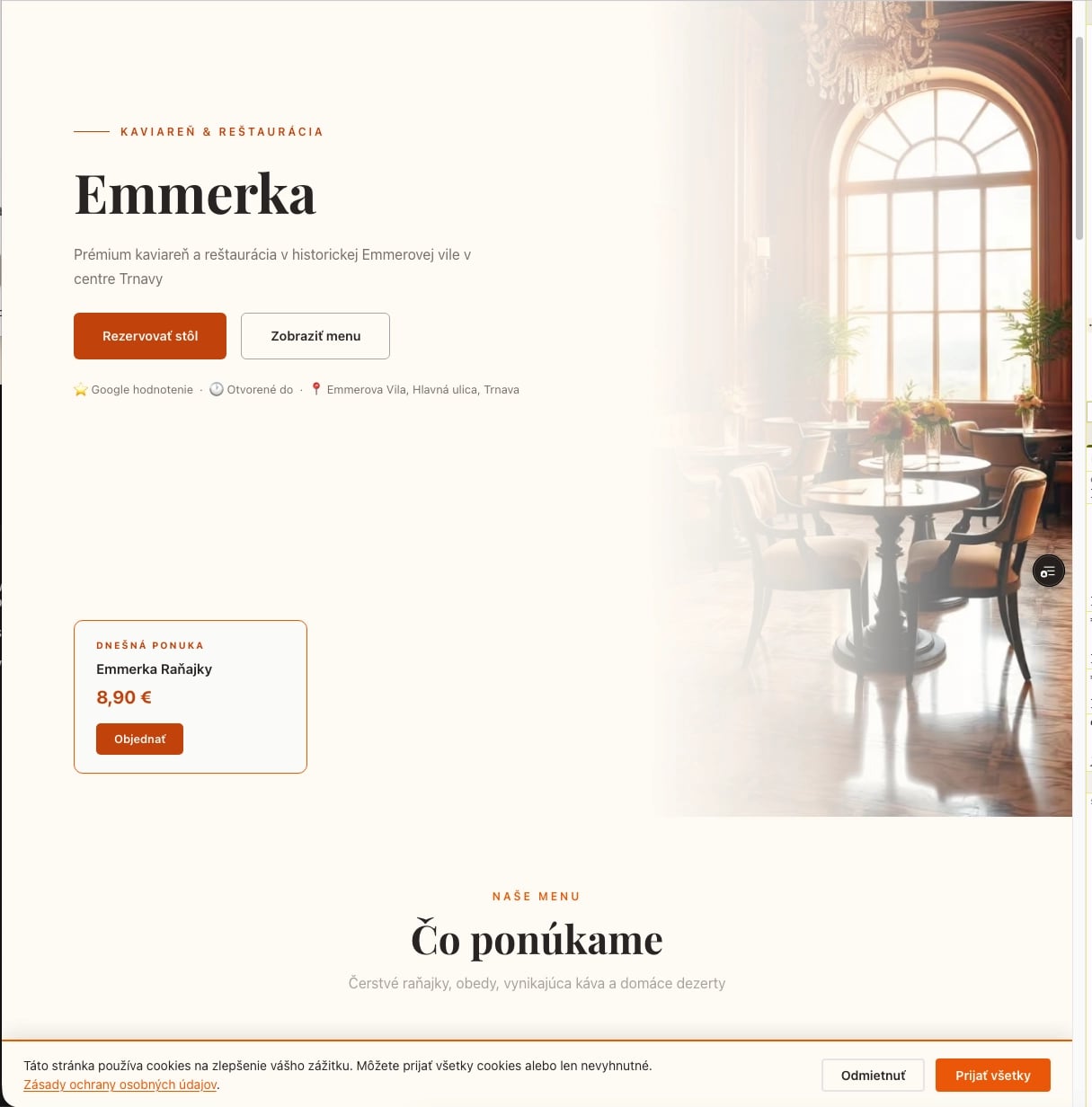
A complete restaurant brand identity at FormaInk covers brandbook, Instagram templates, and a working website with AI management. For the client (Trnava, Slovakia) we built all three. The client declined after the demo. The work stayed in the portfolio — and the demo is still live at emmerka.vercel.app/sk.
Quick Answer: What does a complete restaurant brand identity include in 2026?
- 🎨 Brandbook: 4 logo concepts, 5-color palette with HEX codes, 3 typefaces, application on physical materials
- 📱 Instagram: 12+ templates — feed posts, stories, highlights covers, reels covers (5 content types)
- 🌐 Website: online table booking, menu catalog with AI food photos, 12 MCP admin tools, AI chat management
- 💰 Price range: €300–500 (basic) to €1,500–3,000 (full package)
- 🔗 Demo: emmerka.vercel.app/sk
What does a restaurant get in a complete brandbook?
A brandbook is not just a logo. It's a manual that tells everyone — the chef, the printer producing menus, the person managing social media — exactly how every touchpoint should look.
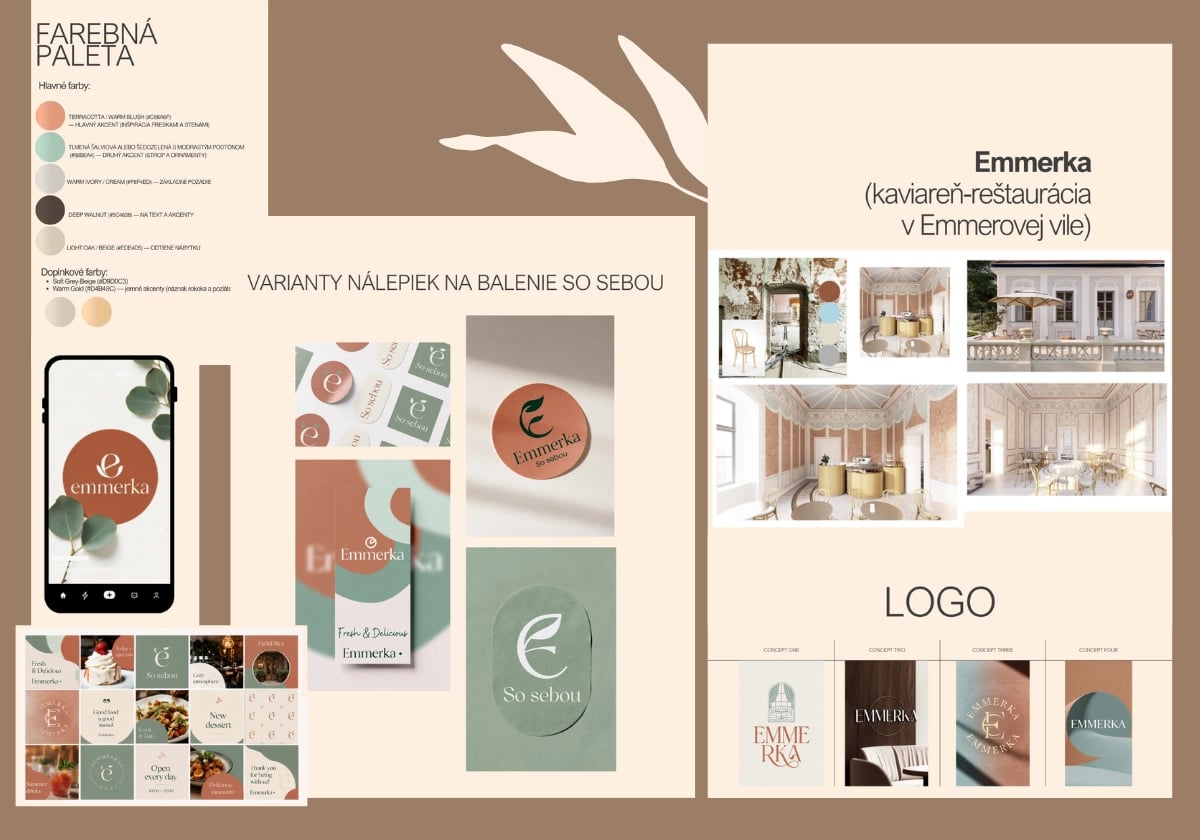
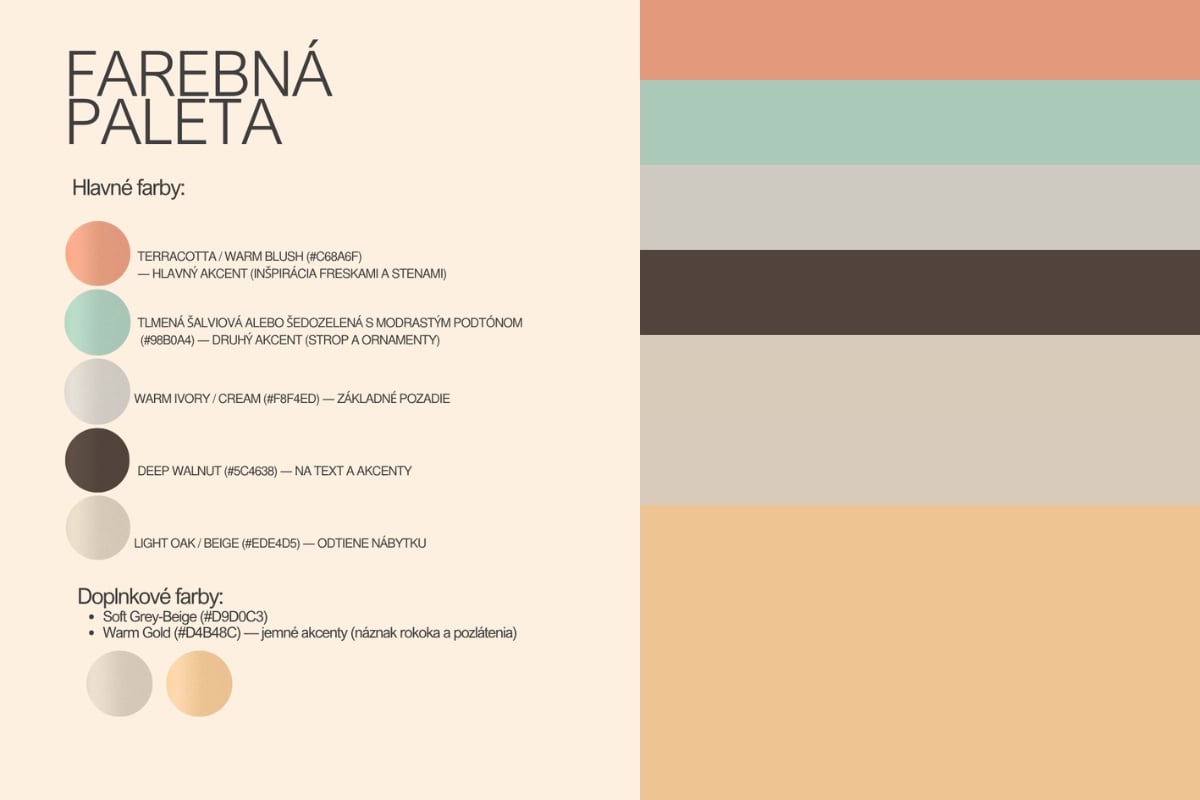
For this project, we built the color system around the villa itself. Five primary colors: Terracotta Warm Blush (#C68A6F), inspired directly by the fresco pigments on the walls; muted Sage Green (#98B0A4) referencing the ornamental ceiling; Warm Ivory (#F8F4ED) as the base background; Deep Walnut (#5C4638) for text and accents; Light Oak (#EDE4D5) for furniture tones. Two supplementary colors — Soft Grey-Beige (#D9D0C3) and Warm Gold (#D4B48C) — add a subtle nod to the rococo gilding without overwhelming the palette.
Typography uses three typefaces: a main serif for headings, a clean sans-serif for informational content like pricing, and a script font for details and pull quotes. The combination works equally well on a paper menu and a digital social post.
The brandbook also documents physical applications: 4 signage variants (round hanging sign, façade wall sign, neon/illuminated accent, and minimalist premium style), 2 menu design directions (elegant and approachable), and takeaway packaging stickers in three sizes.
Why design 4 logo concepts instead of one?
Showing a client 4 concepts isn't about giving them options — it's about helping them understand what they actually want by showing them what they don't.
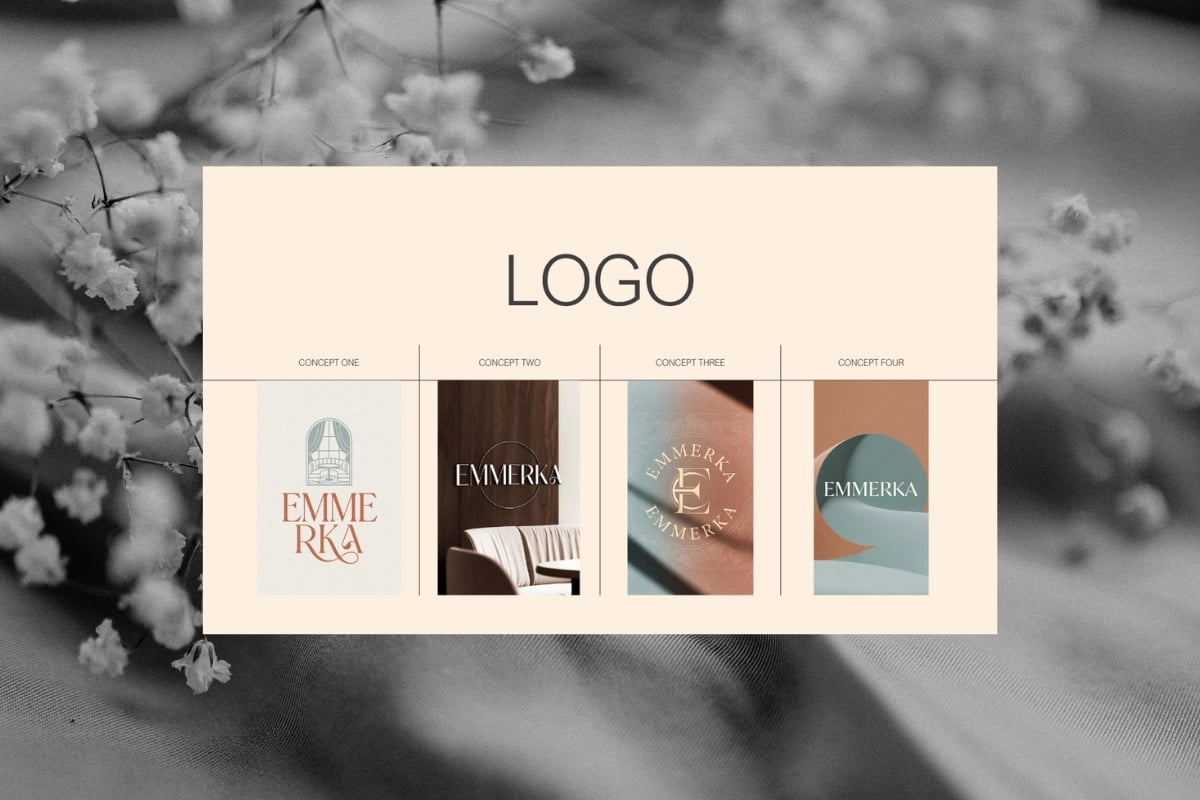
For the client, I developed four distinct directions. Concept one used an arched window motif referencing the villa's architecture, with terracotta serif lettering — classical, dignified, historically grounded. Concept two was the opposite: clean capital letters on dark wood, a modern premium approach with no ornamentation. Concept three was a circular EE monogram — traditional, works beautifully on round stickers and stamps. Concept four used teal geometric shapes with flat planes and negative space.
The final logo didn't come directly from any one of them. It emerged from the conversation: a lowercase italic "é" with a eucalyptus leaf detail inside a circle, with the wordmark "emmerka" set below in lowercase. Organic, feminine, premium — and contemporary enough for Instagram.
In 5 years of graphic design work, I've found that 4 concepts save more total time than 1. Clients articulate what they want more clearly when they can point to what they don't want.
How do Instagram templates work for a premium restaurant?
Instagram is now as important for a restaurant as the physical menu. People decide where to eat based on how a feed looks — not just based on reviews.
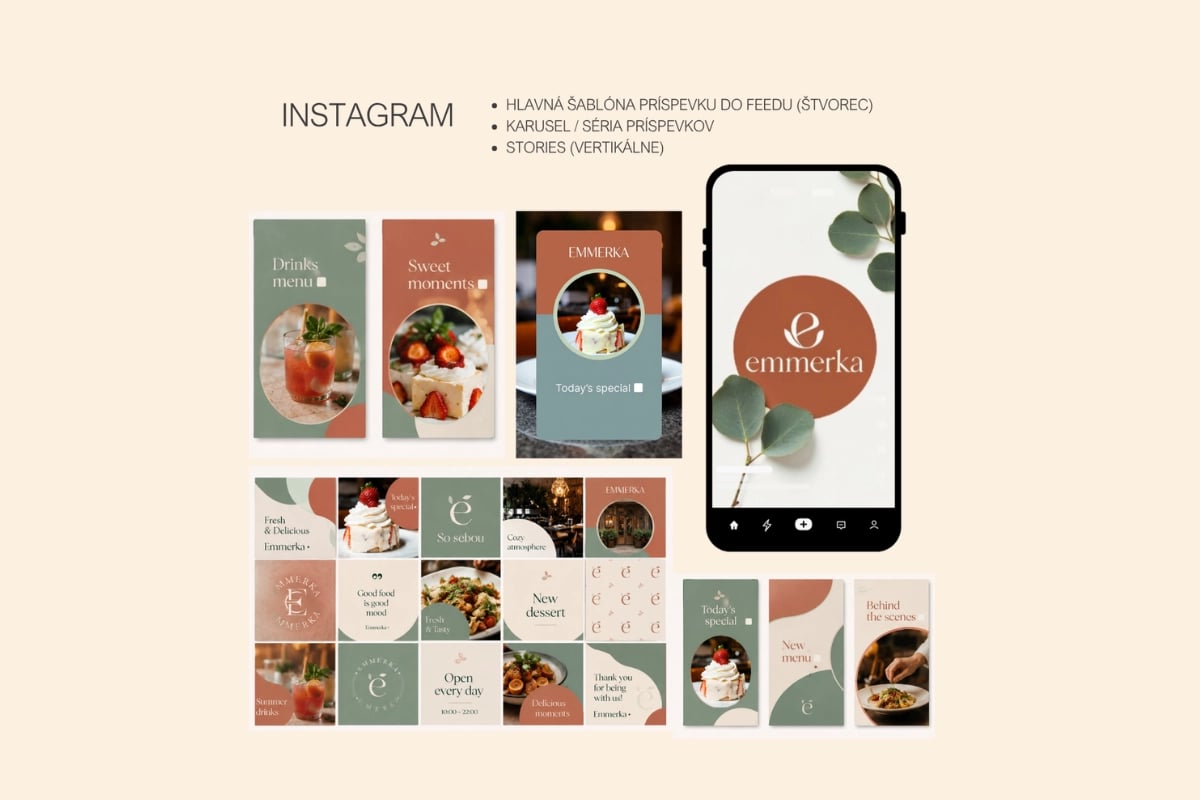
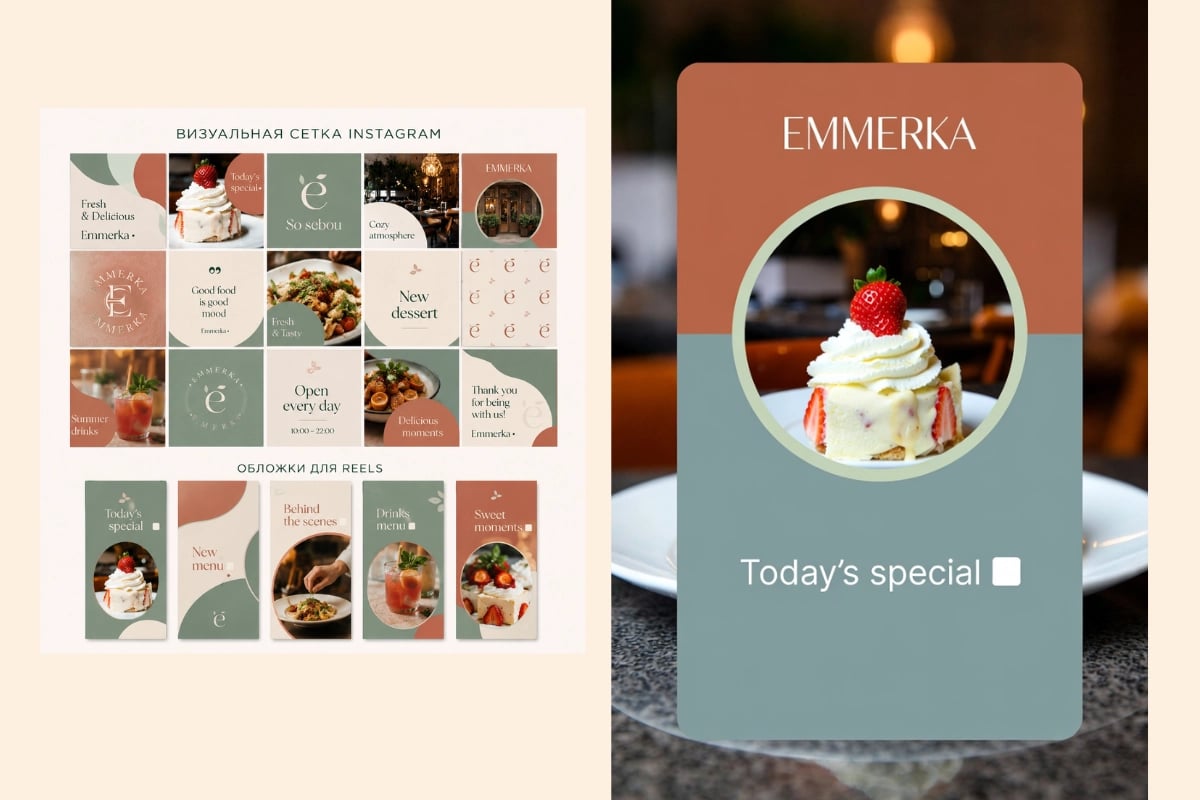
For this project, we built a complete content system: 12 feed templates (square posts and carousel series), vertical stories templates, and reels cover art for five content types — Today's special, New menu, Behind the scenes, Drinks menu, and Sweet moments. Highlights covers span five categories: Menu, Specials, Atmosphere, Chef, and New.
Every element uses the same palette as the brandbook. Nothing steps outside the system. When someone scrolls past a restaurant post in their feed, the visual language is immediately recognizable.
The templates are designed so that anyone — without design training — can use them. Each has a clearly defined zone for the photo, the text, and the price. Swap the content, the consistency holds. Per Nielsen Norman Group research on brand consistency, consistent visual identity across touchpoints increases brand recognition by 80% compared to inconsistent materials.
What can a restaurant website with AI management actually do?
The restaurant website isn't a brochure. It's a working platform for running a restaurant.
Online booking uses an interactive hall map — guests choose a specific table (Terrace, Main Hall, or Café section), select a date, time, and party size. Confirmation arrives by email within 30 minutes. The menu catalog covers 6 categories and more than 25 items, each with photos, pricing, and allergen information (GF, NF, DF, Spicy).
The admin panel includes 12 MCP tools and an AI chat agent running on GPT-4o-mini. The restaurant owner types in plain language: "What are this month's revenues?", "Show top customers by spend", "Create a weekend discount promotion." The system responds and executes. No complex dashboards, no staff training required.
The full demo is live at emmerka.vercel.app/sk.
How does AI food photography change restaurant work?
The client had zero food photos. No professional shots, no food styling, no photographer. Just dish names and prices.
Honestly, I wasn't sure how the client would react to AI-generated photos instead of real ones. It's still a sensitive topic — some people see it as misleading, others as a practical solution. I decided to try.
Using smartcontex.dev — an AI orchestrator that combines leading image generation models — I wrote a precise prompt for each dish. For example: "the restaurant's Breakfast — avocado toast on dark sourdough with cream cheese, cherry tomatoes, and microgreens, served on a white ceramic plate, warm morning light, restaurant setting." The result was a professional food photograph that looks like it came from a magazine.
In 3 hours, all 25 menu items had photos. Traditional food styling and photography would have taken 2 days and cost at minimum €800–1,200. The quality is comparable — and I'm confident most guests wouldn't know the difference.
What happens when a client declines a completed project?
The brandbook was finished. The website was live. The Instagram templates were ready. Then came the email: thank you, but we're putting the project on hold for now.
It happens. In 5 years I've been through similar situations 4 times. Each time it's a hard moment — the invested time, the energy, the ideas. This time it stung a little less.
The project remains one of the most complete projects in my portfolio. The demo runs at emmerka.vercel.app/sk and shows exactly what we can build — from brandbook through Instagram to a fully functional web platform with AI management. Sometimes the best portfolio pieces come from projects exactly like this one.
How much does a complete restaurant brand identity cost?
The most common question: what does it cost? It depends on what you need.
| What's included | Basic package | Full package |
|---|---|---|
| Logo (1 concept) | ✅ | ✅ |
| Brandbook | ❌ | ✅ |
| Instagram templates | ❌ | ✅ |
| Website | ❌ | ✅ |
| AI food photography | ❌ | ✅ |
| Price | €300–500 | €1,500–3,000 |
| Best for | New businesses | Premium restaurants |
If you're opening a restaurant and want to build a premium image from day one, the full package pays back through higher guest trust and consistent visual language across every channel. A basic brandbook alone typically pays for itself within 2–3 print runs — because briefing time drops to near zero for every new project.
For more on individual components, see what restaurant menu design costs in 2026.
Planning a brand identity for your restaurant?
FormaInk creates complete visual identities for restaurants and hospitality businesses across Slovakia, Austria, and Central Europe. Every project starts with a free consultation — we respond within 24 hours.
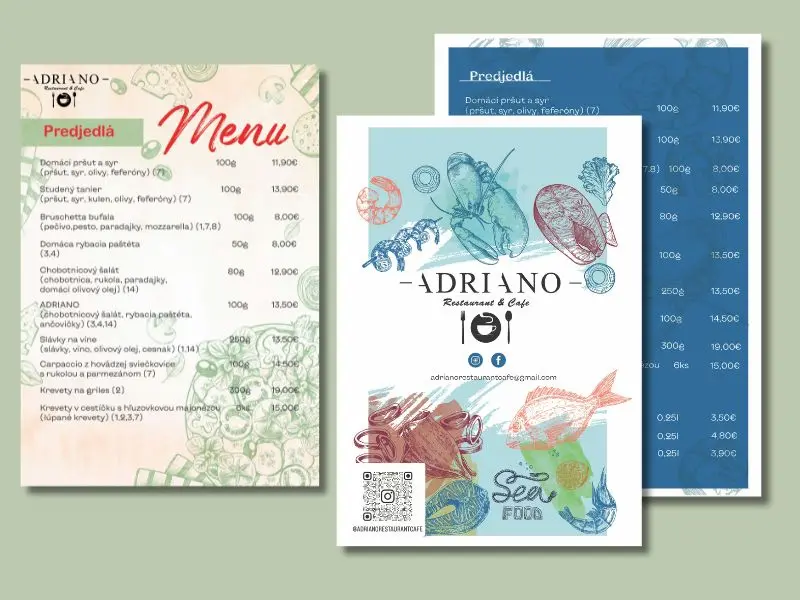
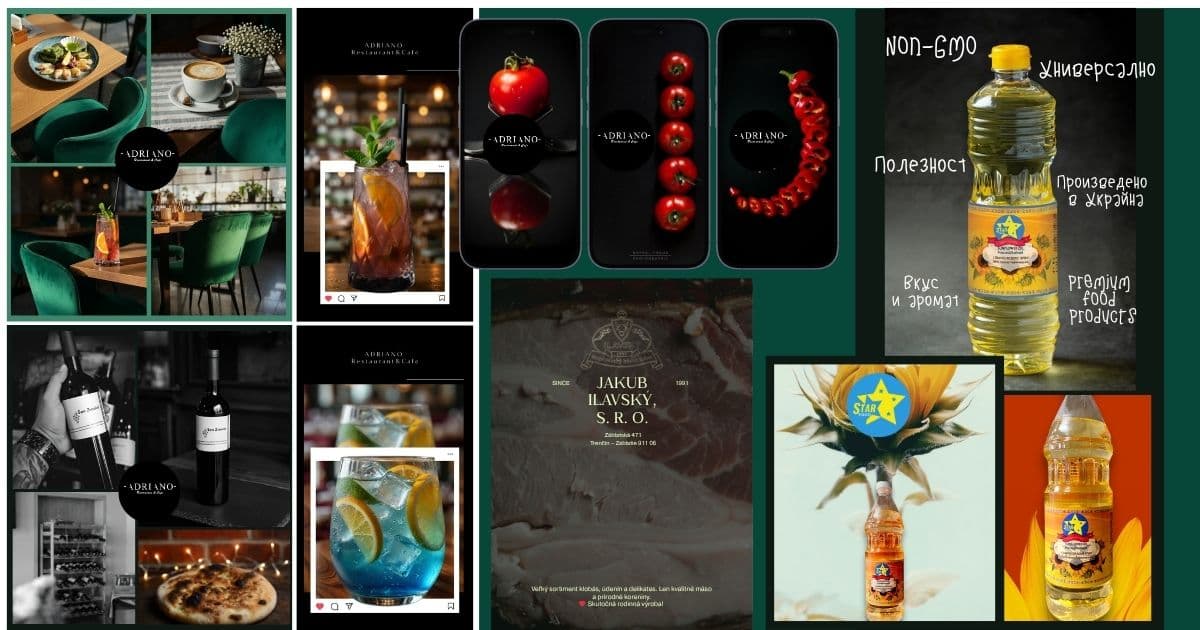
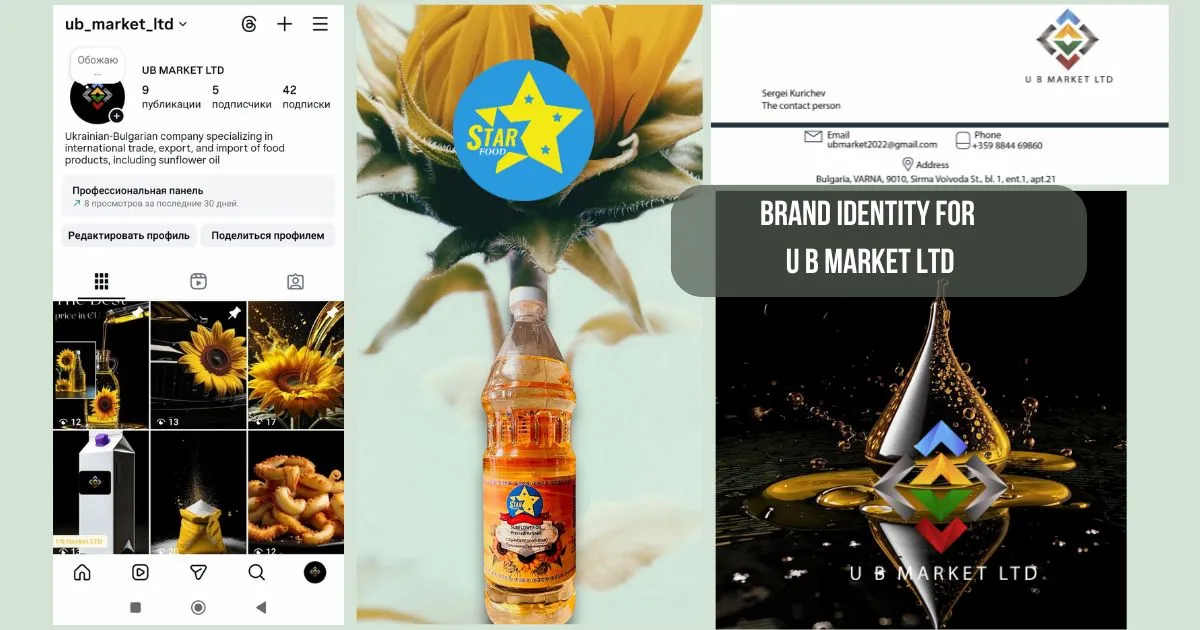
See our restaurant branding services or get in touch directly. Real examples of food brand work: UB Market Star Food identity and Adriano Golf Restaurant branding.

Need a brand identity for your business?
FormaInk creates logos, brandbooks and visual identities for businesses in Slovakia, Austria and Central Europe.
Get in touch